
Kumain ka na ba?
and other ways of saying "I love you"

In the Philippines, after the initial “Uy! Musta?” (Hey! How are you?), we often greet each other by asking “Kumain ka na ba?” (Have you eaten?).
In this edition of Salu-salo, I explore the nuances of this phrase and how it has helped shape my perception of love through different periods of my life.
Mangan tayon!
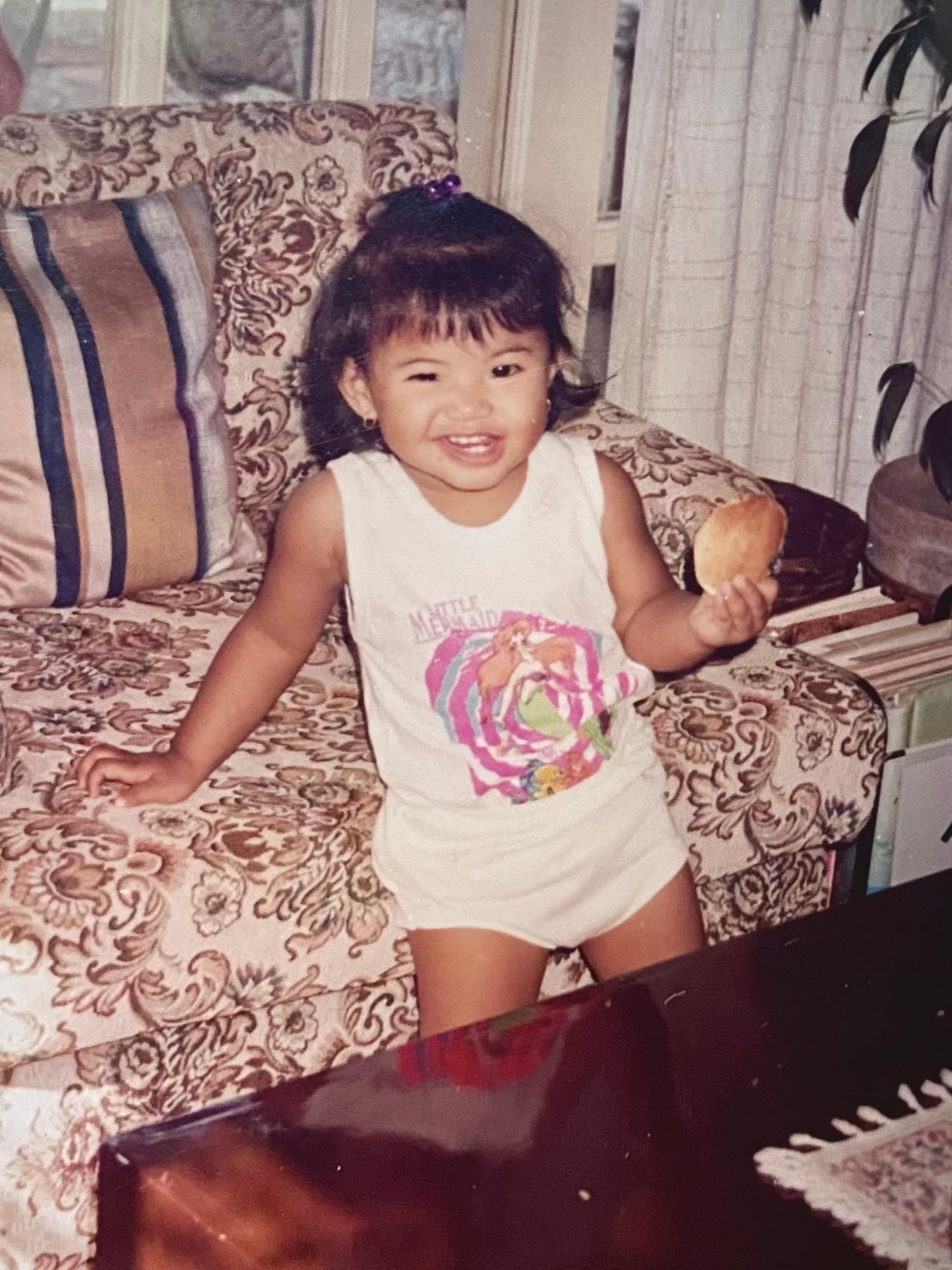
When I was little, my mom taught me to always accept food when offered — it symbolized respect for the matriarch. I ecstatically said yes to all “Kain tayo!” invitations to show that I appreciated being included. The a-mas and aunties loved this of course, “What a plump child!”, they would say. But every time we visited her relatives, I felt lost in a fever dream. I was expected to participate and pretend I understood a culture that I was only exposed to in tiny increments. Delirious from incense fumes and MSG overload, I would smile and pretend I wasn’t overwhelmed by the glaring disconnect.
As I grew older I noticed that most of the time, these invitations are only half-meant in Filipino households. Some people will say “Kain ka muna” (You should eat), without actually expecting you to grab a plate. One time in grade school, I came home late because of a school project and was scolded by my lolo for eating dinner at my friend’s house. He said it was burdensome to ask other people to feed me when we had food at home. This caused tremendous confusion and unnecessary anxiety for the rest of my elementary days, worrying if I was behaving properly in other people’s homes.
Shame is deeply ingrained in Filipino culture, much so that when you’re having a meal at someone’s home, there is almost always a disclaimer: “Pasensya na ito lang ulam namin” (Sorry this is all we have). I became aware of food as a marker of one’s economic status when a classmate pointed out that I always had ‘expensive’ snacks during recess. Being raised in a Catholic household diminished any significant chance I had of becoming a shame-free teenager; I suddenly carried so much guilt and decided to deny myself the pleasure of eating.
My chaotic push-and-pull relationship with food started to get better when I discovered the work of Anthony Bourdain. I was 14 when I first read A Cook’s Tour, which quite literally changed the trajectory of my life. I had known Bourdain as a writer before learning his rockstar TV chef status; my fondness for his culinary insight is rooted in the tenderness of his words. This was the book that encouraged me to dream beyond the small town I felt suffocated in. In that same year, I experienced what would be the beginning of my gastronomic curiosity: during a family dinner at Manila Peninsula, I walked up to the grownups and announced, (really, I was declaring this newfound courage in myself) “I want to eat an oyster”.
The years that followed were a blur of college applications and mishaps. At 20 I had accepted that I was gloriously failing uni and enrolled in culinary school in an attempt to fast-track my life. During the course briefing, I thought that our head chef was exaggerating when he said, “Forget your friends, your pets, your plants, your girlfriends and boyfriends. You will only have time for the kitchen.” For nine months I lived in an impenetrable bubble of mother sauces, slicing techniques, food costing, cookware brands, reattaching the underside of my barista crocs every time it came off (more often than I liked!). I would be at school as early as 5 AM, come home late at night, and eat Lucky Me pancit canton with Gisslen propped open on the dining table.
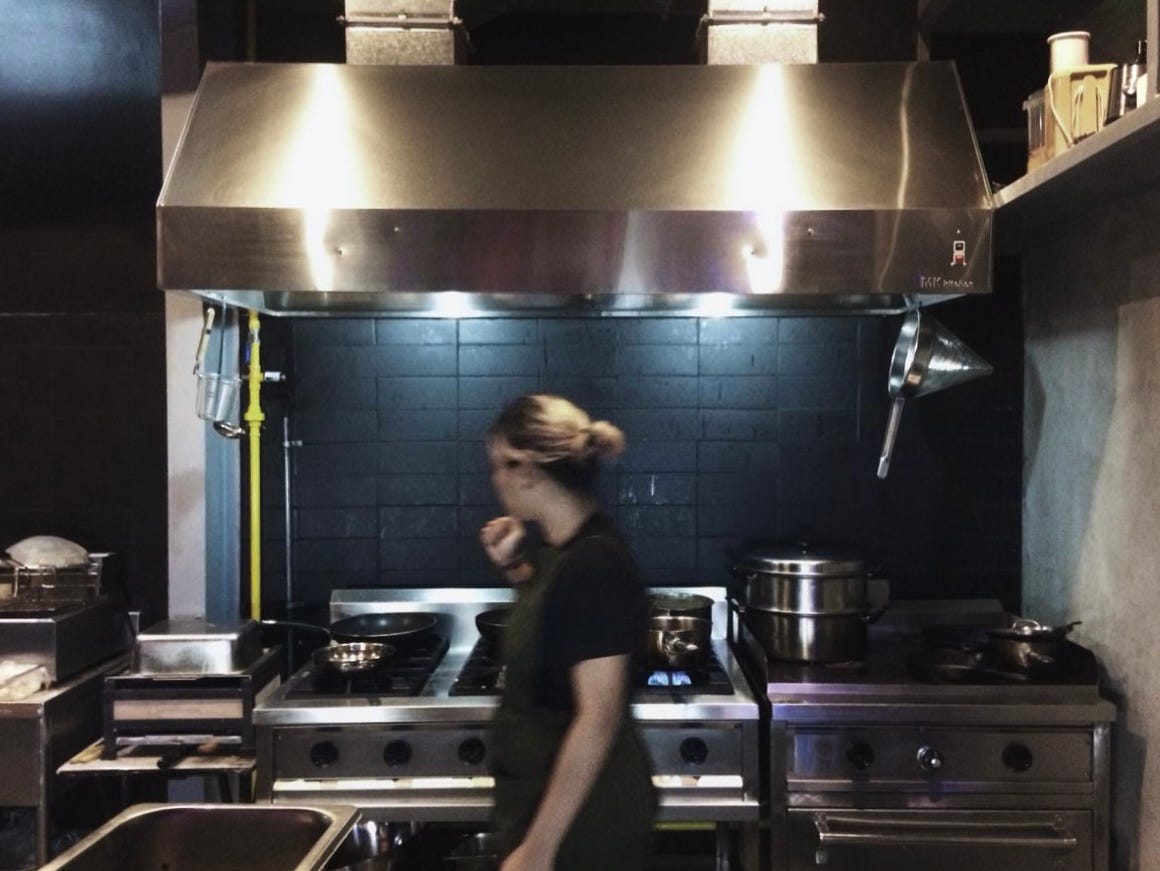
I was committed to the race. I built my career on the premise of speed. If I go fast, I’ll get there (an unknown, ergo unrealistic goal) sooner! I can’t slow down, I don’t have time. As if a white rabbit was hurrying me: You’re late. Move. Now. BITCH, GO. I was exhausted but told myself, I shouldn’t be whining, this is exactly how Bourdain writes it in Kitchen Confidential. This is how I become a good cook. How naive of me to think that neglecting my body in my early twenties wouldn’t result in catastrophic burnout. After swearing off service kitchens at 27, I moved back to Isabela defeated by the thought that maybe I was just bad at doing what I loved.
I had resigned to the idea that I didn’t have the amor, I wasn’t cutthroat enough, I was too emotional to be a cook. The one time I tried to console myself, I went to the palengke to buy fruits (as I usually do to lift my spirits). They had just renovated our public market and I found myself in a maze of people with crates of Baguio veggies spilling on the ground. A middle-aged man started talking to me in Ilocano, encouraging me to buy his tomatoes (I think), but all I could say was diak maawatan po.
“Diak maawatan” (I don’t understand) were the only words my family taught me to say in the dialect. They said it would be a sufficient answer to anyone who tried to converse with me. I would shamefully murmur this at bus stations, in markets, to elders at school. I knew the look of disappointment all too well. “Ilocana ka pero di ka marunong?” (You’re Ilocana but you aren’t fluent?), “Taga rito ka?” (Are you from here?) followed by the clucking was enough to send me spiraling into a panic attack. I’d be frantic, mustering enough courage to explain but I’m learning! before I’m dismissed with “Tsk, napintas pa naman. Sayang!” (What a waste of beauty!)
This nagging feeling of otherness in my hometown prompted a conscious deep dive into my Ilocana heritage, which resulted in a (WIP) cookbook/memoir that involved my yaya, Manang Ne. I’m grateful for how she has ingrained food into my life. So much of who I am in the kitchen is a reflection of her and the warmth she put into her cooking. I may have obtained a culinary degree but I will always be that little girl who watched her slaughter chickens and scale live fish. She taught me every cut of meat and what they were good for; our kitchen always a concealed crime scene just moments before serving the most hearty meals. 2019 was the year I realized she had planted that seed in me long before I even knew.
It was a year of gentle discovery and brutal mourning. In the process of writing my memoir, I lost two friends to suicide and my grandfather to cancer. Manang kept me nourished in the height of depression, my mornings consisted of her pressing me to eat. “Bangon na. Mangan tayon!” (Get up. Let’s eat!), she would offer in singsong. I lay paralyzed in bed, deaf to her calls of companionship. Sometimes she would lure me into the kitchen with trivial tasks like reaching for a vinegar bottle on the top shelf or asking me to taste her cooking. “Is this good, chef?”, she would joke, and I couldn’t help but lean into her boisterous laugh. In a household that spoke different languages I barely understood, food communicated love. ✦
If I thought I had ever known grief, losing you came like a sucker punch. I tell myself that death is a natural part of life and it will rebirth a new capacity for love. It will feel unfamiliar but it is the same love expanding, finding its way back to me.
+ Flordeliza Tagao
1957-2022
busy rn, txt u l8r
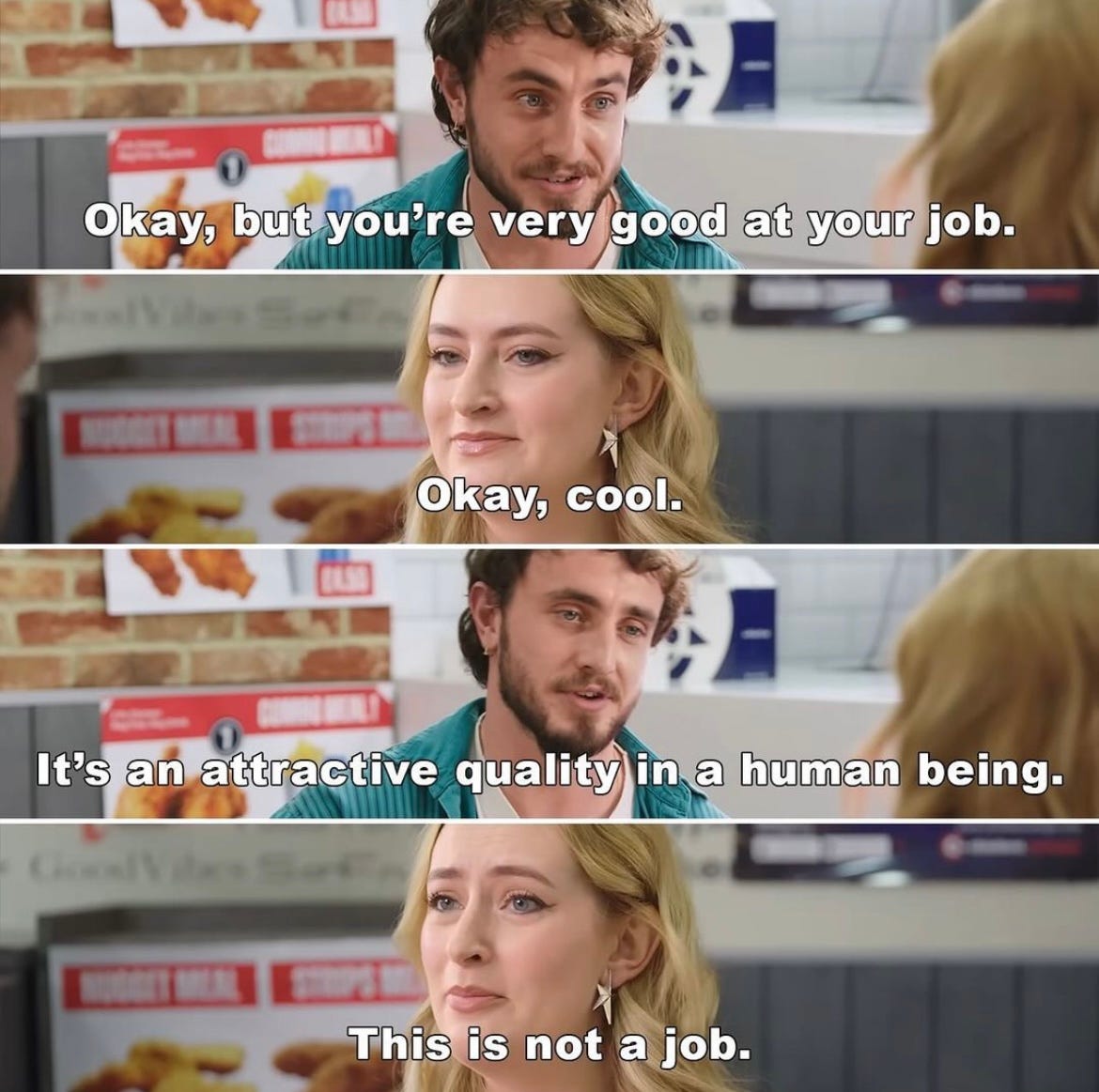
I have a theory that most of us in the F&B industry have Acts of Service as a primary love language, whether we’re aware of it or not. There is a certain insanity that comes with wanting, let alone enjoying this type of work. The kitchen can be a place of communal healing and reckless abandonment; do we seek refuge or avoid it? Are we, as a team, intentionally merging passions or successfully escaping ourselves? What level of callousness is just enough to call it being busy? The mirage of immersion fades once we stop doing anything with our hands, so we keep them full.
Anything can be a void filler. From mincing garlic, to washing dishes, to labeling containers. There is always something to keep you preoccupied. I have good reason to believe that people (yes, me) who purposely choose this life are in constant search of a distraction from internal chaos. Some of the best people I’ve met work in kitchens and all of them are insane. A distinct quality of service workers is that we operate, no, we THRIVE in turbulent circumstances. An understaffed restaurant during dinner rush sounds like a party to me because it keeps the mental riot at bay.
The most common misconception about being a chef is that we get to have it all: career fulfillment, lucrative salary, robust social life. Truth be told, work-life balance is almost non-existent on the line. Relationships are hard to maintain with a job so physically and emotionally taxing. It’s no surprise that the kitchen is now my wife life. Romance is a tough area to navigate. Hours are late, some days I reek of fish, and once my social battery is depleted, the only energy I can muster for conversation is spent replying to the veggie dealer. How exactly am I expected to ‘go out and meet people’?
The few years that I spent actively dating ultimately led to the decision of staying single. It’s crazy out there. Convenience seems to be a key factor in modern dating, you get unmatched or blocked if you can’t reply within 2 seconds. I’m not sold on the idea that exchanging texts is enough to foster genuine connection. I consider myself lucky to have grown up in the age of dial-up internet. It used to be that when you logged out of the computer, you were gone. You pinged me on YM? You’ll have to wait until I decide if it’s worth the hassle to plug in all the wires and obstruct incoming calls on our home phone.
Patience is a lost art in communication. The pandemic is partly to blame for this culture of instant gratification, but humans have always been finding ways to convolute technology since way back. If you had a mobile phone during the Suncell Unli boom, you deserve compensation for receiving Gm~ texts morning, noon, and night! Gm (group message) is a personalized SMS template sent to numerous contacts. This era birthed the relationship status known as “text mates” and the uniquely Filipino phenomenon of Jejemons, characterized by random capitalization, misspellings, and other nonsensical combinations of numbers and letters such as heh3, H4hAHa, and oP0h.
A common phrase sent in a Gm~ during mealtime is “kaEn ph0wz” (Kain po), a thoughtful reminder for you to eat on time. Fast forward to current times, the phrase “Kumain ka na ba?” has evolved into courtship language. It can be a casual way of flirting with a crush or expressing concern for your significant other. Amidst the hyper pop synths and lively bass of BINI’s hit song Lagi, the girls sing about the euphoric feeling of falling in love:
At t'wing wala sa'yong piling
Telepono ko ay puno ng usapang mahalaga sa'tin
Tipong “Magandang umaga!” o “Kumain ka na ba?”

Far from endearment, when we ask “Kumain ka na ba?” in the kitchen, it’s meant as a cautionary nudge: Eat now because it’s going to get hectic. An unhealthy habit I picked up while working in commercial kitchens is forgetting to eat before service. I’ll be in the middle of pushing out an otherwise normal ticket when an internal alarm starts sounding off and I wonder why I’m mad at the server for standing too close to the pass. Yikes. So much conflict could have been avoided if I had learned to listen to my body sooner.
I got better at intuitive eating when I went on hiatus from cooking professionally. Once I had repaired my personal relationship with food, I made the conscious decision of returning to the culinary scene with a fresh perspective. Instead of escaping, I now see cooking as a means of connecting. I started noticing mannerisms of the people I work with and discovered an obvious pattern: putting other people first came natural to us, and that can be harmful. We are givers and lovers, and we avoid romance because of this self-awareness.
My dating life continues to be a topic of interest at friend hangs. “Why didn’t you text him back??? Jowa o career? Ano ba talaga? (Do you really want a boyfriend?)”, they ask. I can’t imagine a life where I would have to prioritize a romantic partner above the kitchen. The right person wouldn’t ask me to. My husband would understand that cooking is more than a job to me; it is my life’s work to feed people and make them feel nourished, in return, this nourishes me too. Until I meet that special person, I’m content with the devotion I share with fellow cooks.
It makes sense to surround myself with those who understand the thoughtfulness we put into each gesture. The way we communicate love is this: by warning “KNIFE” or “HOT! BEHIND!”, holding the fridge door open, offering a glass of water after a heated service, the awkward patintero attempts at removing our idle selves from a busy line, playful conversations during family meals, the words “yes, chef!” recited in perfect unison. I can walk into any kitchen and instantly know that I am loved. ✦
Ingat! :-)
“Ingat!” was a catchphrase that gained fame in the early 2000s because of a certain paracetamol commercial, it means “Take care!”. But JLC isn’t the only cultural signifier of imparting this:
“Ingat became the word of goodbye, replacing the old “sige”, during the martial law years. It was the last word uttered between and among those meeting to discuss what had to be done, in ways big and small, to end the Marcos Dictatorship. It was said with all the love and respect one was capable of. Because chances were one would meet again only in a prison cell, or a torture house, or at a wake.” - Ninotchka Rosca
My heart sank upon learning its gravity in the Martial Law period. I can’t think of any parting words as simple yet so laden with affection. “I love you” is a proclamation of feelings, whereas “Ingat” is a deliberate request: please take utmost care of yourself, I wish to see you again. It is in this act of continuity that we persevere in the face of uncertainty, the promise of caring for ourselves in hopes of returning to each other in the best shape. My grandparents have relayed their own stories of love and horror from surviving the Marcos years — how they carried on to become doctors with no guaranteed careers is a true testament of community care as the core of resistance.
Last week we discussed Historical Revisionism in my KAS1 class. It was timely of me to revisit Martial Law Now, as Then, a compilation of essays citing the similarities between ML and pandemic restrictions. This made me reflect on how my introverted nature hinders my ability to fully engage in my advocacies. I didn’t know the importance of community to my overall sanity until I was cornered into isolation. Lockdown did quite a number on our collective mental health, but I continued being a recluse even when it was safe to go outside.
I’m blessed to be surrounded by other activists who encourage me to resist in ways that I can vs pressuring me to perform a role. I would be lying if I said I wasn’t absolutely awestruck when I first met NXM Tadiar last year in her hometown of San Fernando, La Union. She invited me to lead a project called “Mangan!”, a book-inspired takeover of their library cafe. Neferti graciously offered their home for my stay and I obliged. To say that I was cared for simply doesn’t do it justice, alagang alaga ako. I knew it was because they considered me as one of their own, but as what? An Ilocana? An activist? Perhaps both.
The Tadiar Library being a progressive space is an impressive feat of divergence rarely seen in the “Solid North”. I was excited to not only be an honorary guest but also to experience my two passions come together — literature and food. This invitation came at a time when I thought that my grief was insurmountable, I remember boarding the Partas bus still clouded with self-doubt. Towards the end of my stay, my worries were replaced with heartfelt reassurance that the resistance welcomes me with open arms, no matter where I am in my journey.
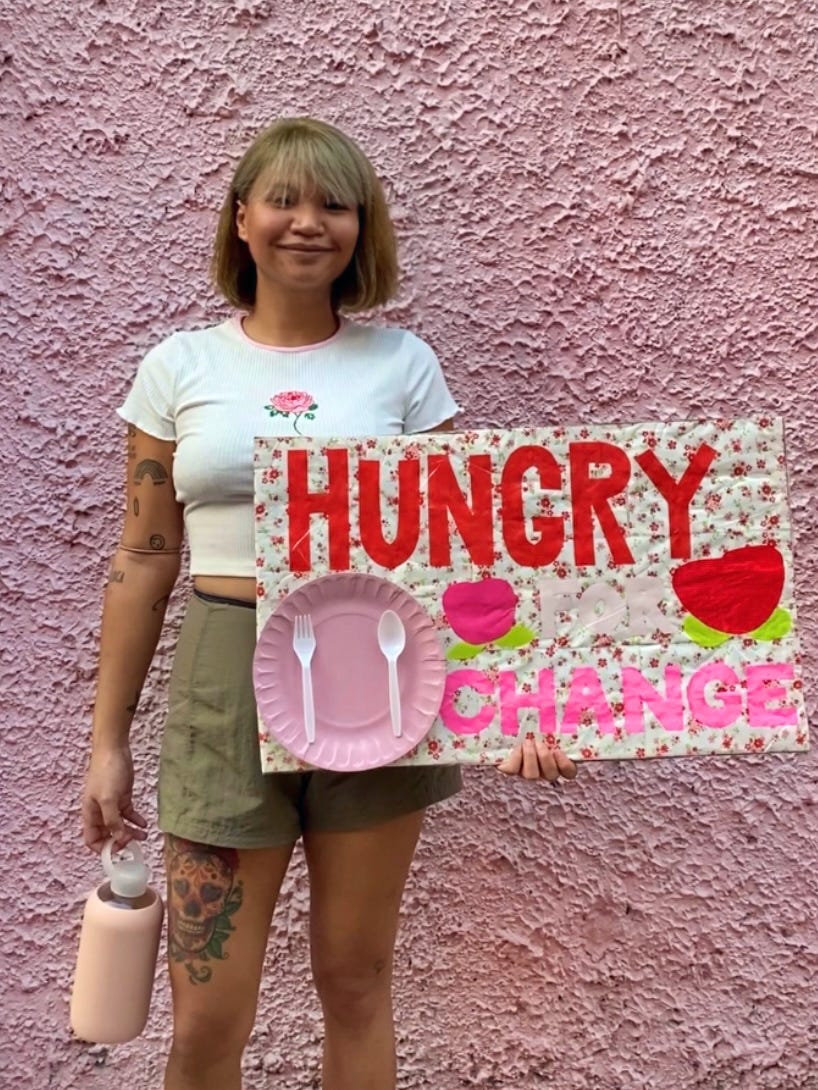
The resistance doesn’t question “Who are you?”, it beckons you to come as you are. Echoing the same thoughts I shared in my previous post, the only prerequisite to being an activist is showing up. The idea that liberation can only be attained at the end of a revolution needs to be retired, we are constantly freeing ourselves through small, intentional acts of resistance. Magnified, this string of efforts is what makes a solid community. Showing up for myself and others will look different depending on my current capacity, but the collective goal is unchanging. We choose to be here for and because of each other.
To be loved means to be consumed. To love is to give light with inexhaustible oil. To be loved is to pass away, to love is to endure. - R.M. Rilke
Now every time someone bids me “Ingat ka”, it renews my will to love and live.
No fear in perfect love. I wrote down this misquoted bible phrase in my journal after a heartwarming conversation with Paul. My perception of love keeps expanding; whether it be platonic, romantic, familial, or self-love. I’m gradually learning that love shouldn’t be all-consuming, urgent, LOUD. It feels like a carefully placed blanket without waking you from sleep. Love is the comfortable silence of being in different rooms of the house. It isn’t performative or anticipatory or demanding or fearful or transactional. Love is enduring and selfless because a person who truly loves knows to only share spillover from their own. ✦
Postscript ~ I can’t believe we’re already 6 months into this year. January 2024 me hit publish on Hunger Pangs and needed a moment to recover. So much has happened! I’ve attended two weddings, flew overseas for a concert, resumed my studies, and spent half this time cooking on a remote island. I have been crying A LOT!!! Happy tears, sad tears, angry tears… all the tears! It’s been a ride, thanks for still being here.
Sharing some recent reads that also involved violent sobbing:
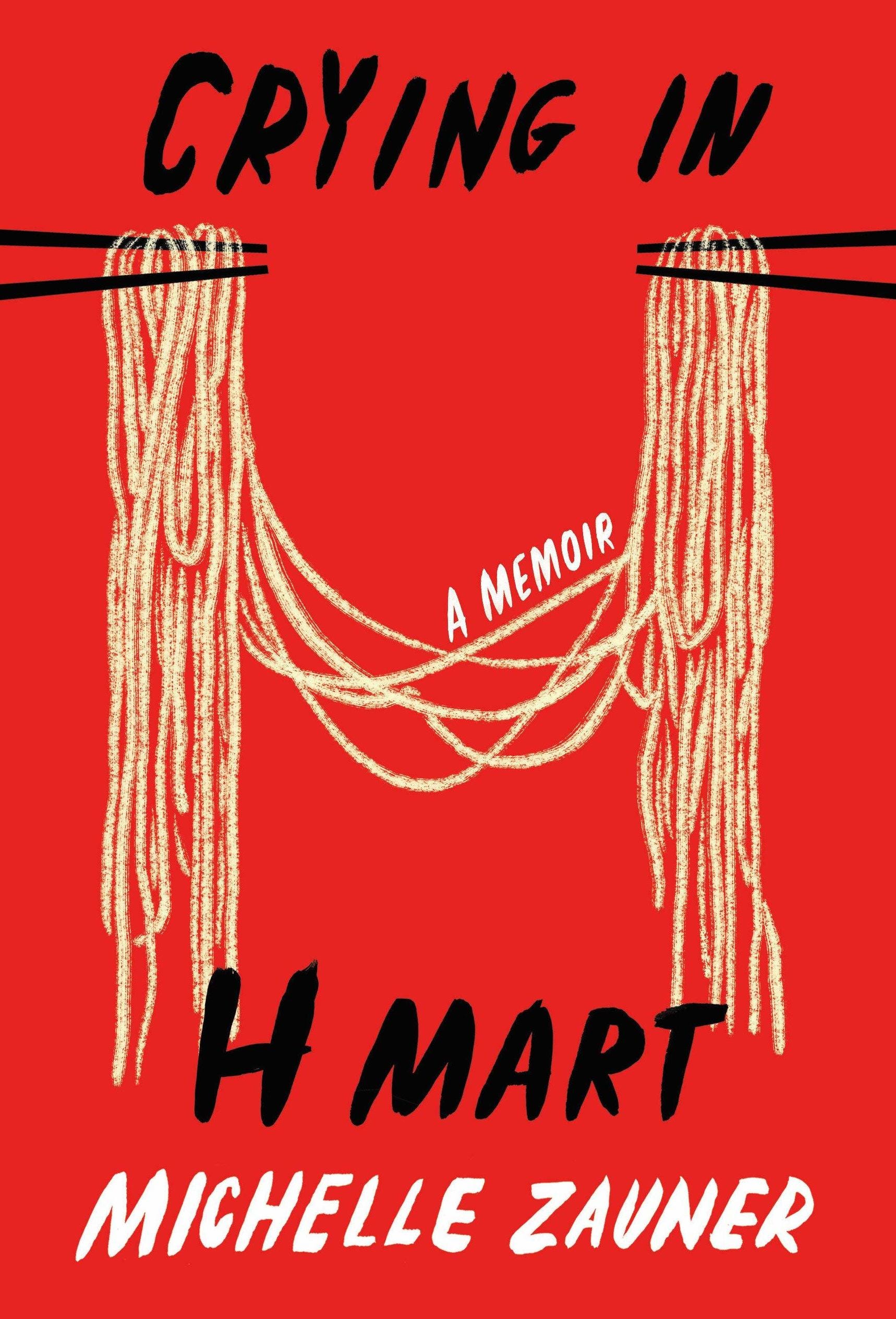
Crying in H Mart - Michelle Zauner
Jbrekkie writes about the tender untangling of twisted family ties. I’m familiar with the grief that comes with an inherent disconnect to a culture you can only partake in by affiliation; coping with feeling orphaned when the string that links you to that identity is severed. Her articulation of the mere act of eating sent me to tears each time. The emotional bond she has with food is a language only a few understand.
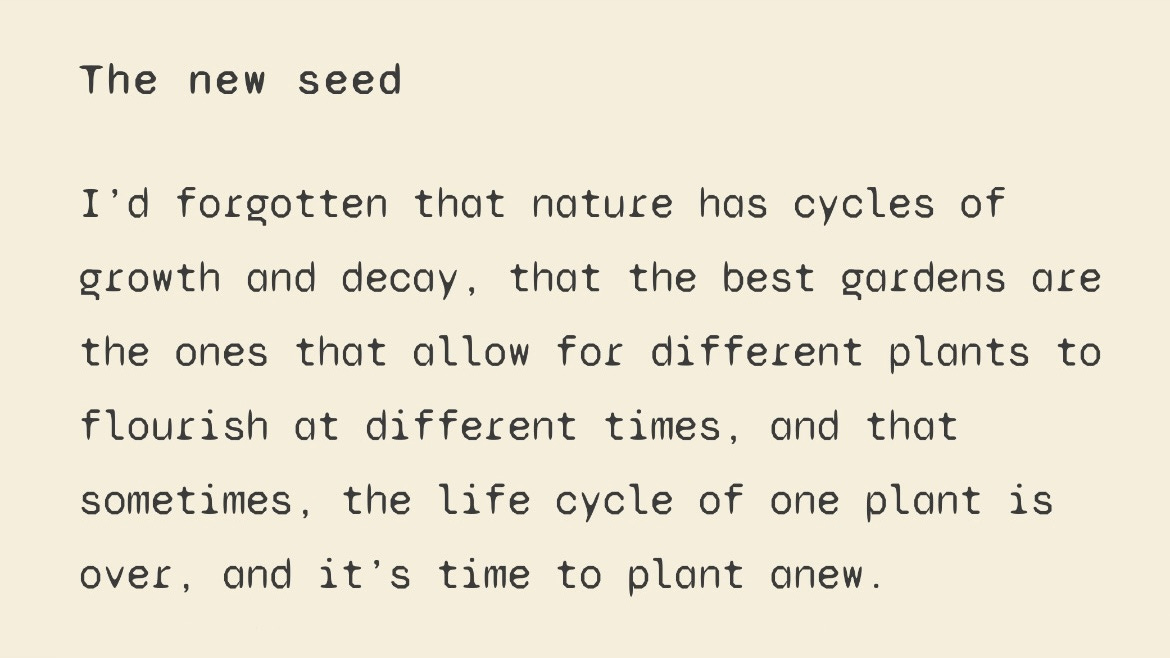
Called to the Garden - Jen Horn
A moment of clarity while reading Jen’s contribution to Food Today, Food Tomorrow. The full essay is available on Pagbubuo. Grateful for this reminder to come at a tumultuous time of navigating a brand new season. brb sprouting 🌱
Sending you warm embraces of love and belonging.
Patricia ♡
If you appreciate Salu-salo, feel free to share this publication or pledge your support